Peel aftercare on Long Island starts the moment you leave your appointment, and it’s the part of treatment that’s easiest to overlook.
Your skin looks fresh, maybe a little pink, and you’re ready to get back to your day. What happens next matters as much as the treatment itself. The first few days are when your skin does its most important work, and the way you care for it during that window shapes how your results look and how long they last.
Here’s what’s happening under the surface, why your skin barrier needs extra care right now, and the simple routine our providers recommend.
What’s Happening in Your Skin After a Peel
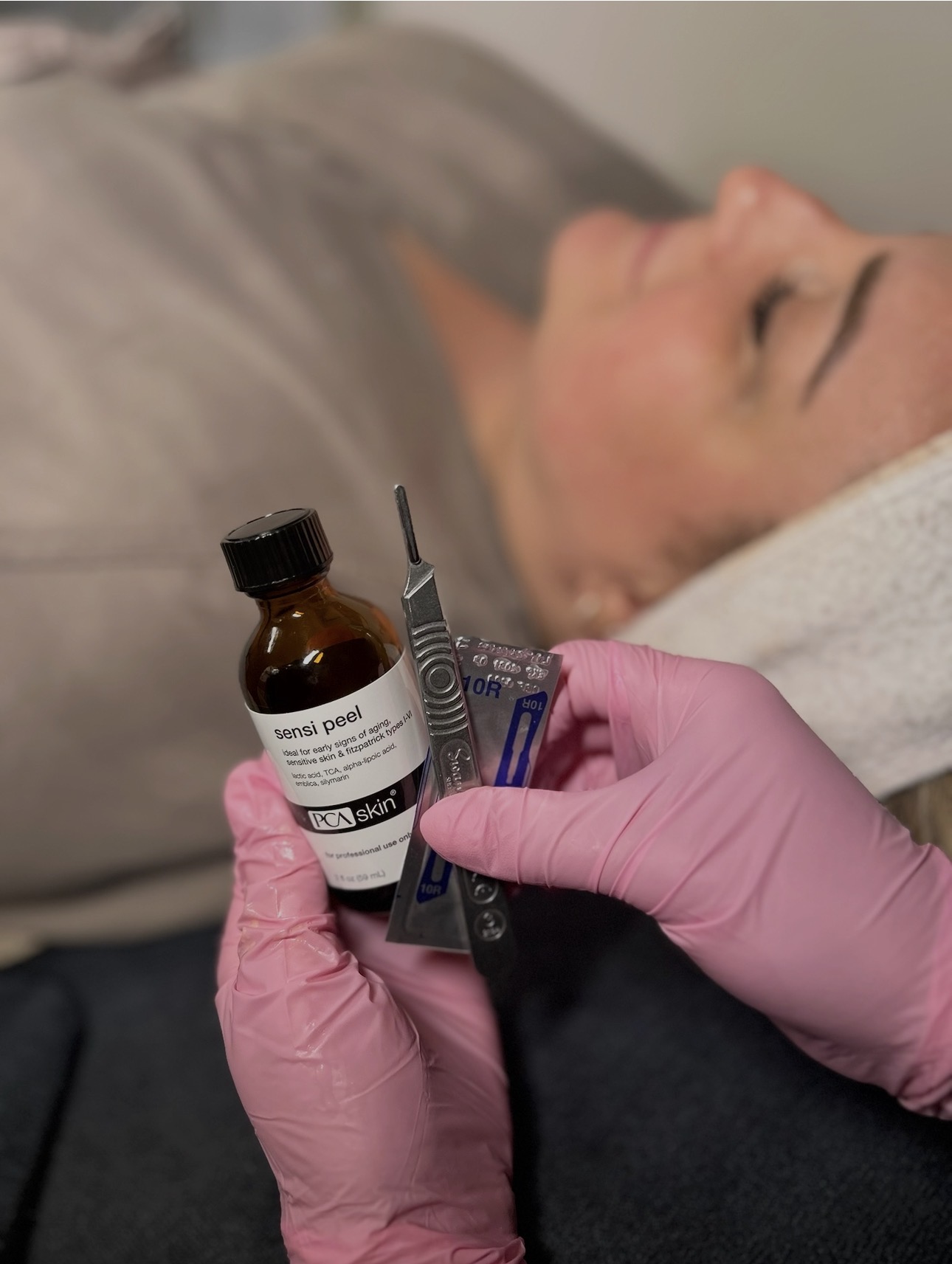
A chemical peel loosens the bonds between dead surface cells. Over the next several days, those cells shed and fresher skin comes forward. Your skin is in active renewal mode, replacing what was removed and rebuilding its outer layer.
Laser resurfacing follows a similar pattern at a deeper level. Along with surface renewal, it prompts your skin to build new collagen, a process that continues for weeks after your appointment.
In the first few days, you may notice:
- Tightness. Fresh skin can feel snug, especially after cleansing.
- Dryness or light flaking. After a peel, this usually shows up over the following few days, depending on the strength of your peel.
- Pinkness. After lighter laser treatments, most clients see a day or two of pinkness and dryness.
Every treatment is different, and your provider will tell you what to expect for yours before you leave.
Peel Aftercare on Long Island Starts With Your Skin Barrier
Your skin barrier is the outermost layer of your skin. It’s made of skin cells held together by lipids, including ceramides, and it has two main jobs: keeping moisture in and keeping irritants out.
After a peel or laser treatment, that layer is renewing. While it rebuilds, your skin can lose moisture faster than usual, and products that normally feel fine may sting or feel heavy. A strong barrier keeps you comfortable while you heal, and it gives your skin the stable foundation it needs for your results to settle in.
For more background on chemical peels in general, the American Academy of Dermatology’s chemical peel FAQ is a helpful resource.
Peel Aftercare on Long Island: A Simple Routine
Post-treatment skincare doesn’t need to be complicated. In the first few days, fewer steps are better. Our providers recommend three:
- Cleanse gently. Use a creamy, non-foaming cleanser with lukewarm water, and pat dry. Skip scrubs, brushes, and hot water.
- Hydrate calmly. Apply a barrier-supporting moisturizer with ceramides and lipids morning and night, and any time your skin feels tight.
- Protect daily. Wear sunscreen every morning, even on cloudy days, and limit time in direct sun while your skin heals.
What to skip while you heal
- Picking or peeling flakes. Let them shed on their own so the fresh skin underneath isn’t disturbed.
- Strong actives. Hold retinol, exfoliating acids, and vitamin C until your provider gives the go-ahead.
- Extra treatments at home. Pause at-home peels, masks with exfoliants, and facial tools for the timeframe your provider gives you.
What We Recommend for Peel Aftercare on Long Island
These are the three products our team reaches for most often after peels, laser, and microneedling. Your provider may adjust your routine based on your skin type and your treatment, since every regimen at modernDOSE is personalized with the Baumann Skin Type System.
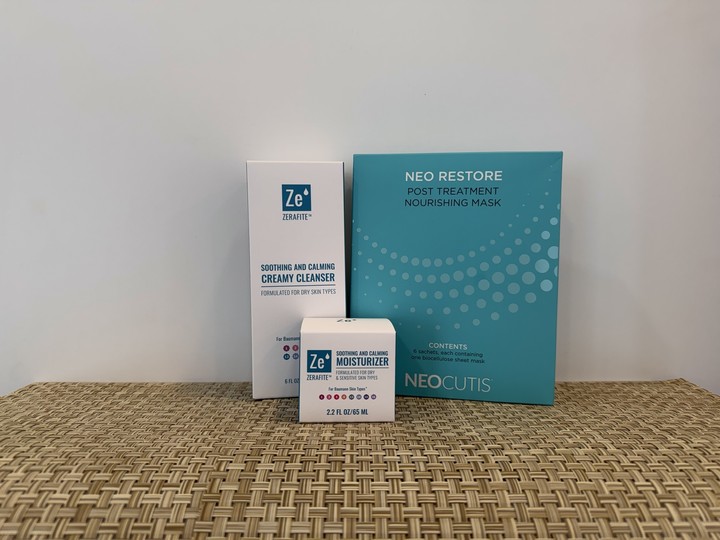
- Zerafite Soothing and Calming Creamy Cleanser. A gentle cream cleanser with sunflower seed oil and centella asiatica. It cleans without stripping, calms the look of redness, and supports the barrier.
- Zerafite Soothing and Calming Moisturizer. A barrier-repair moisturizer with ceramides, lipids, argan oil, niacinamide, vitamin E, and CoQ10. It’s non-comedogenic, so it won’t clog pores.
- Neocutis Neo Restore Post-Treatment Nourishing Mask. A biocellulose mask with peptides and hyaluronic acid, designed for the days after laser, microneedling, or a peel to soothe and support recovery.
Not sure which routine fits your skin? Ask your provider at your next visit, and we’ll build it into your plan.
Protecting Your Results Beyond the First Week

Aftercare doesn’t stop when the flaking does. The results from a peel or laser treatment hold best with consistent care over time, and daily SPF is the single habit that protects them most.
Both treatments are part of an ongoing plan, not a one-time fix. Our chemical peel treatments are typically done as a series, then continued as maintenance on a schedule your provider sets.
If you’re deciding what comes after your peel, our guide to choosing between a chemical peel and laser resurfacing walks through how each one works. Expected timeline and maintenance vary by person.
The goal is skin that looks like you, only more rested, and the confidence of knowing exactly how to care for it. A good peel aftercare routine on Long Island is simple: gentle, calm, protected, and consistent.
FAQ
How long does it take skin to recover after a chemical peel?
It depends on the strength of your peel. Many clients notice mild dryness or light flaking for a few days as surface cells shed. Your provider will share your specific timeline after treatment.
Is it okay to peel the flaking skin?
No. Let flakes shed on their own. Picking or peeling can disturb the fresh skin underneath and affect how your results settle.
When can I restart retinol after a peel?
Hold retinol and exfoliating acids until your provider gives the go-ahead. The timing depends on your skin and the treatment you had.
Can I wear makeup after a peel?
Ask your provider, since it depends on your treatment. Many clients wait until their skin feels comfortable and settled before returning to their usual makeup.
Do I need different aftercare after laser resurfacing?
The basics are the same: gentle cleansing, calm hydration, and daily SPF. Your provider may add specific steps based on your laser treatment, and you’ll leave with written instructions.
modernDOSE is located in Lindenhurst, NY serving Babylon, West Islip, and surrounding Long Island communities. Our nurse practitioners and estheticians build personalized treatment and peel aftercare plans on Long Island, based on your goals and your skin.